Quick answer
HSS is the budget option for soft metals; HSS-E (cobalt, M42) keeps its hardness at high temperature and is the best value for stainless steel and most production work; carbide is the hardest and fastest for high-volume or abrasive materials, but brittle and expensive. For most countersink applications, HSS-E cobalt is the recommended balance of cost, life and toughness.
Material comparison table
| Property | HSS (M2) | HSS-E Cobalt (M42) | Carbide |
|---|---|---|---|
| Hardness | HRC 62-64 | HRC 65-67 | HRA 90+ |
| Hot hardness (red hardness) | Low | High (Co 5-8%) | Very high |
| Toughness | Good | Good | Brittle, chip-prone |
| Tool life on stainless | 1x | 2-3x | Highest (if used correctly) |
| Price | Lowest | Moderate | Highest |
| Best for | Aluminum, brass, mild steel | Stainless, production, general | High volume, abrasive, hardened steel |
HSS (standard high speed steel)
Standard HSS is inexpensive and tough, but its hardness drops quickly when cutting temperature rises. It works well for aluminum, brass and mild steel at moderate speeds, but wears fast on stainless steel.
HSS-E cobalt (M42) — the balanced choice
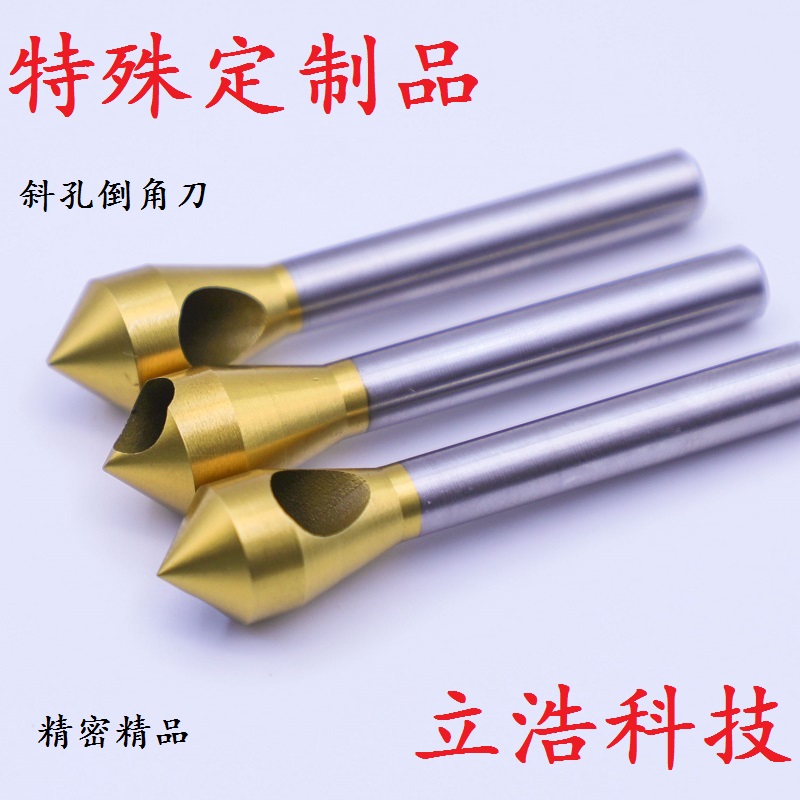
HSS-E contains 5-8% cobalt (M42 grade), which keeps the cutting edge hard at higher temperature (red hardness). It lasts 2-3x longer than standard HSS on stainless steel and is far less fragile than carbide. Lihao Technology manufactures its countersinks from German-imported M42 cobalt HSS-E bar stock, ground to ±0.1° angle tolerance.
Carbide (solid / tungsten carbide)
Carbide is the hardest material — best for high-volume runs, abrasive composites and hardened steel. However it is brittle: a carbide countersink can chip on interrupted cuts, vibration or misalignment, and it costs several times more. Use it when volume justifies the price and the setup is rigid.
How to choose for your job
| Workpiece | Recommended material |
|---|---|
| Aluminum / brass / mild steel, light duty | HSS or HSS-E |
| Stainless steel (304, 316) and production | HSS-E cobalt |
| Hardened steel / abrasive / very high volume | Carbide |
Frequently asked questions
Is HSS-E worth the extra cost over HSS?
Yes for stainless and production work — HSS-E lasts 2-3x longer, so the cost per hole is usually lower despite the higher price.
Why not use carbide for everything?
Carbide is brittle and expensive. On interrupted cuts or flexible setups it can chip, and the cost is hard to justify for small or mixed batches.
What material does Lihao Technology use?
German-imported M42 cobalt HSS-E bar stock, ground on in-house precision machines with ±0.1° tolerance, factory direct.